From Bogle to Blockchains: The Quietly Radical American Idea Hiding Inside Automated Market Makers
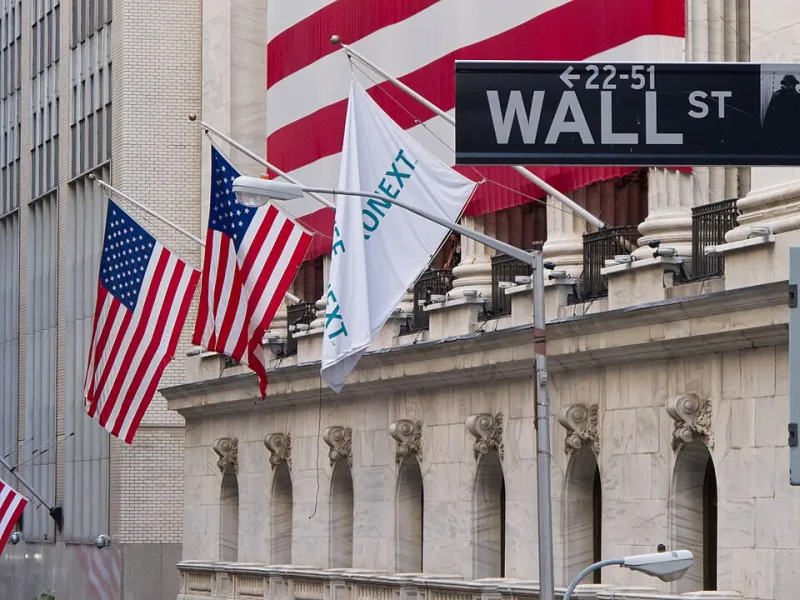
Photo: Carlos Delgado, CC BY-SA 3.0, via Wikimedia Commons
Let's get the skepticism out of the way first, because if you've been around crypto for more than a minute, you've earned it. Automated market makers — the software that powers every swap on DuckSwap — sound absurd on paper. There's no order book. No specialist on the floor. No market maker with a Bloomberg terminal and a coffee. Just a formula holding two tokens in a pool and letting strangers trade against it, twenty-four hours a day, from anywhere.
It sounds like a scam or a science project. And yet I'd argue it's the most consequential piece of American market engineering since the index fund. Hear me out.
The Problem Jack Bogle Actually Solved
In 1976, when John Bogle launched the First Index Investment Trust, Wall Street's reaction ranged from amusement to open hostility. "Bogle's folly," they called it. The idea that ordinary Americans should be able to own the whole market, at near-zero cost, without a broker's blessing or a salesman's pitch — that was considered unserious. Passive. Lazy. Beneath the professionals.
It took decades, but that folly became the default way tens of millions of Americans invest. The index fund won not because it was clever, but because it was fair. Same rules for everyone. No gatekeeper deciding whether you were a sophisticated enough client. No information advantage baked into the structure itself.
Now look at an AMM and tell me you don't see the family resemblance.
What a Market Maker Used to Cost You
Before DeFi, if you wanted to trade a token, you needed someone to take the other side. On traditional exchanges, that job belonged to designated market makers and dealers — firms with capital requirements, exchange memberships, regulatory registrations, and, crucially, the right to profit from your order flow. Payment for order flow scandals didn't invent the problem; they just put it on the front page.
The deal was always the same: we provide the liquidity, we keep the spread, and you pay for access whether you notice it or not. And if you wanted to be the market maker? Great — here's a mountain of paperwork, capital requirements, and infrastructure costs.
An AMM hands that entire arrangement a pink slip. Anyone with a wallet can supply liquidity to a pool and earn the fees that used to be the exclusive franchise of licensed intermediaries. Anyone with an internet connection can trade against that liquidity at published, predictable prices — no account approval, no accredited-investor questionnaire, no market hours.
Rules Instead of Gatekeepers
Here's the part that I think deserves more credit than it gets: the AMM replaces human discretion with a public formula. The classic x·y=k curve doesn't care who you are. It quotes the same price to a hedge fund in Chicago and a college student in Ohio. There's no negotiation, no tiered access, no "institutional pricing."
Compare that to the long American tradition of two-tier markets. The NYSE of the 1800s had the "specialists" and the crowd. The 1990s had NASDAQ dealers colluding on spreads until investigators cracked down. Even today, the best execution often goes to whoever has the relationships. The AMM's radical proposition is that the rules of the market can be the product itself — transparent, auditable, and identical for every participant.
Is that perfect? No. Bots exploit speed. Sandwich attacks prey on sloppy trades. That's why protocol design matters — it's why we obsess over MEV protection here at DuckSwap. But the flaws are flaws in a system that's open by default, which means they can be engineered around. Closed systems can't be fixed by their participants. They can only be petitioned.
The 24/7 Thing Is Not a Gimmick
American markets close. They close at 4 p.m. Eastern, they close on weekends, they close on holidays, and they close for emergencies. Every one of those closures is a moment when price discovery stops and someone with a position is stuck.
Index funds didn't fix that — they made holding easier, but trading still lived inside market hours. AMMs never close. Liquidity is there at 3 a.m. on Thanksgiving, repricing continuously as the world changes. For a country that increasingly works, shops, and lives around the clock, a market that keeps those hours isn't a novelty. It's overdue.
The Honest Caveats
I'm not going to pretend the analogy is airtight. Index funds come with SIPC protections, tax reporting, and forty years of case law. DeFi comes with smart contract risk, impermanent loss, and a regulatory environment that's still being litigated in real time. Bogle never had to warn anyone about a rug pull.
And the fees aren't zero — LPs earn them precisely because providing liquidity involves real costs and risks. The AMM doesn't eliminate intermediation costs; it redistributes them from a licensed class to a distributed crowd. Whether that crowd is compensated fairly is exactly the question the rest of this site exists to explore.
Why the Comparison Matters
The point of this little history lesson isn't to sell you a bag. It's about how you evaluate the technology. If you see AMMs as casino software, you'll trade like it's a casino and get casino results. But if you see them as the next step in a very American project — markets that answer to rules rather than gatekeepers, where a teacher's retirement account and a whale's treasury get the same price — then the design questions become interesting. Which pools have honest depth? Which protocols actually protect retail order flow? Which yields are real?
Bogle's folly took thirty years to win. The AMM is a decade old and already clearing hundreds of billions in annual volume. The ducks are early. For once, that's the point.