Good Money After Bad: The DeFi Psychology Trap That Keeps LPs Pouring Into Dying Pools
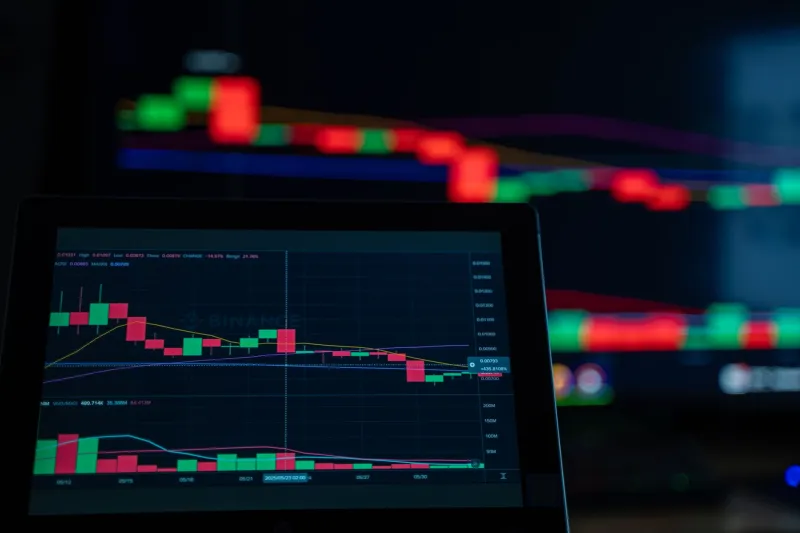
You've been in the pool for three weeks. Volume is down. Your fee income has basically flatlined. One of the paired tokens is quietly underperforming. And yet — somehow — your brain is telling you that the right move is to add more liquidity.
This isn't a strategy. It's a psychological trap. And it's one of the most common (and costly) mistakes that liquidity providers make in DeFi.
Let's talk about why it happens, what it actually costs you, and how to build a mental framework that helps you tell the difference between a pool worth sticking with and one that's quietly circling the drain.
The Sunk-Cost Fallacy, DeFi Edition
Most people have heard of the sunk-cost fallacy — the tendency to keep investing in something simply because you've already invested so much. It's why people sit through terrible movies they paid for, or keep fixing a car that's costing more than it's worth.
In DeFi, the sunk-cost fallacy gets turbocharged by a few unique features of the ecosystem.
First, there's the visibility problem. Unlike a stock you can just ignore in your brokerage account, an LP position demands attention. You're watching fees accrue (or not accrue). You're tracking price ratios. You're seeing impermanent loss estimates in real time. All that active monitoring creates a false sense of engagement — like you're doing something just by watching — and that engagement makes it harder to walk away.
Second, there's the recovery narrative. DeFi moves fast, and sometimes dead pools do come back. A token gets a major exchange listing. A protocol announces a new integration. Volume surges overnight. LPs who've seen this happen once or twice start believing it can happen again — even when the fundamentals say otherwise. Hope, in this context, is expensive.
Third, there's fee income as a psychological pacifier. Even a dying pool generates some fees. Tiny amounts trickling in can trick your brain into thinking the position is working, even when impermanent loss and opportunity cost are quietly wiping out those gains many times over.
What a Pool in Terminal Decline Actually Looks Like
Not every struggling pool is dying. Some are just going through a rough patch tied to broader market conditions — and those are worth holding through. The tricky part is knowing which is which.
Here are the signals that separate a temporary dip from a genuine death spiral:
Volume is falling faster than the market. If the broader crypto market is down 15% but your pool's volume is down 60%, that's not a market problem — that's a pool problem. Healthy pools tend to maintain relative volume even in bear conditions because traders still need liquidity. A pool losing volume disproportionately is losing relevance.
The spread between fee APR and impermanent loss is widening — in the wrong direction. This is the core math of LP profitability. When fee income starts losing the race against IL, you're paying to stay in the pool. If that gap has been growing for more than a couple of weeks, it rarely closes on its own.
Liquidity is leaving without you. Check the pool's TVL trend. If other LPs are quietly withdrawing — especially large, presumably sophisticated LPs — that's a signal worth taking seriously. Smart money doesn't always move first, but it rarely moves last.
Token fundamentals have structurally shifted. A price drop is one thing. But if one of your paired tokens has lost a key partnership, seen its dev team go quiet, or had a major exploit, the recovery thesis changes completely. Temporary volatility and structural deterioration are very different animals.
The Case For Patience (When It's Actually Warranted)
To be fair, not every struggling pool deserves an exit. Some genuinely do recover, and pulling out at the wrong moment means locking in losses right before a rebound.
Patience pays when the pool's decline is clearly tied to external, temporary factors — a broader market selloff, a short-term liquidity crunch, or a protocol-level event that's already been resolved. In those cases, the underlying token fundamentals are intact, volume tends to bounce back in a predictable pattern, and the IL you've accumulated often gets partially reversed as prices normalize.
Patience also makes sense when you're in a high-fee tier with concentrated liquidity around a range that still sees regular price action. Even reduced volume through a well-positioned range can generate meaningful returns.
The key question to ask yourself: Is there a specific, identifiable catalyst that would bring this pool back — and is that catalyst realistic within a timeframe I can afford? If you can't answer that question clearly, you're probably rationalizing, not strategizing.
A Simple Decision Framework for LPs on the Fence
When you're staring at a position and can't decide whether to add, hold, or exit, run through these four checkpoints:
-
The Fee Test: Are your last 14 days of fee income, annualized, beating a comparable low-risk alternative (like a stablecoin pool or even a simple yield aggregator)? If not, you're already losing the opportunity cost battle.
-
The Volume Trend Test: Pull the 30-day volume chart. Is it a flat line with noise, or a downward slope? Flat with noise means volatility. A slope means trajectory.
-
The Thesis Test: Write down in one sentence why you entered this pool. Now ask: is that thesis still true? If you can't confirm it with current data, the thesis is dead.
-
The Addition Test: Before adding more capital, ask yourself — if you had never been in this pool, would you enter it fresh today, with the current data in front of you? If the answer is no, adding capital is just sunk-cost thinking wearing a strategy hat.
The Real Cost of Staying Too Long
Here's what makes the liquidity trap so insidious: the cost of staying in a dying pool isn't just the direct losses. It's also the compounding opportunity cost of capital that could have been working elsewhere.
Every week you spend in a pool with negative real returns is a week that capital isn't earning in a healthier pool, a better yield strategy, or even just sitting in a stablecoin and waiting for a cleaner entry point. In DeFi, capital efficiency matters enormously — and loyalty to a bad position is one of the fastest ways to destroy it.
Know When to Swim Away
DuckSwap gives you the tools to see what's actually happening inside your positions — fee accrual, price range activity, TVL trends. Use them honestly. The data doesn't have feelings. It doesn't care how long you've been in the pool or how convinced you were when you entered.
The best LPs aren't the ones who never make bad calls. They're the ones who recognize bad calls faster than everyone else and cut them before the damage compounds. That's not giving up — that's just smarter capital management.
Sometimes the bravest thing you can do in DeFi is withdraw, regroup, and redeploy somewhere the math actually works in your favor.