Your Pool Is Quietly Dying and the Numbers Are Hiding It
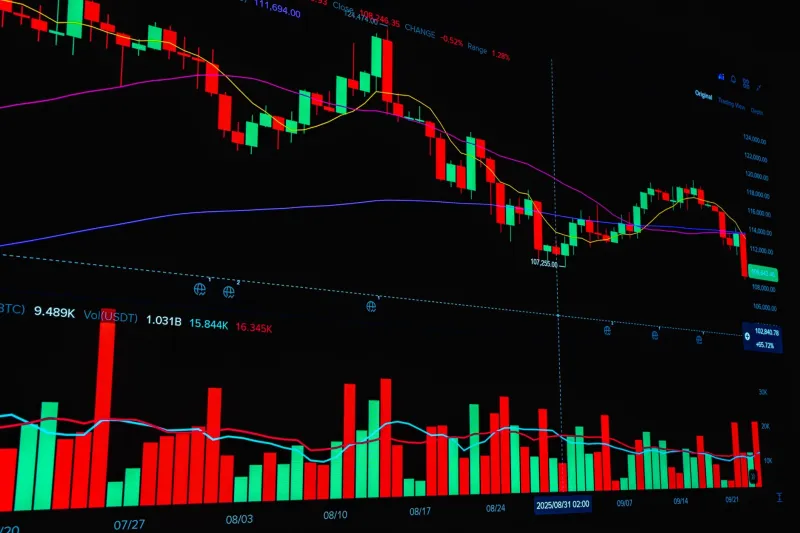
Everybody who's spent time providing liquidity knows the usual suspects. Impermanent loss. Fee tier mismatches. Concentrated range blow-outs. These are the things that keep LPs up at night, and honestly, they should. But there's another threat that doesn't get nearly enough attention — one that doesn't announce itself with a dramatic price crash or a sudden APY collapse. It just... shows up slowly, over weeks, in the form of a pool that used to hum with activity and now barely gets a glance.
We're talking about declining trading volume. And the reason it's so dangerous is that most LPs don't notice until it's already cost them real money.
Why Volume Is the Actual Engine of Your Returns
Here's a quick reality check: as an LP, you don't earn fees because tokens are sitting in a pool. You earn fees because traders are using that pool to swap. Every trade that routes through your liquidity position generates a small cut for you. More trades, more fees. Fewer trades, fewer fees — no matter how beautifully you've set your price range or how carefully you've chosen your fee tier.
This is why volume is the real engine underneath everything. A pool with $500K in TVL and heavy daily volume will almost always outperform a pool with $5M in TVL that barely sees any action. TVL is the tank. Volume is the fuel. And when the fuel starts running dry, the tank doesn't matter.
The tricky part is that volume doesn't disappear overnight. It fades. And most LP dashboards are designed to show you a snapshot — your current position value, your estimated APY, your fee accrual. They're not great at showing you a trend line that whispers hey, this pool was doing three times this volume six weeks ago.
The Early Warning Signs You're Probably Missing
So what does a pool in decline actually look like before it hits rock bottom? A few things to watch:
Daily volume starts lagging behind TVL growth. If the pool's total liquidity is holding steady or even growing while daily volume drops, that's a red flag. It means more capital is chasing fewer trades — which translates directly to thinner returns per dollar you've deposited.
Your fee accrual slows down even when price is stable. This one trips people up. If the token pair isn't moving much and you assume that's why fees are low, you might be right. But if fees are still low when price starts moving again, that's not about volatility anymore — that's about volume leaving the pool.
The pool is losing its slot in routing. On DuckSwap and most DEXes, swap routers automatically direct trades to the most efficient path. If a competing pool — maybe on another protocol, or a different fee tier — starts offering better rates or deeper liquidity, your pool gets deprioritized. Traders don't choose their route manually; the algorithm does it for them. And the algorithm doesn't care about your feelings.
Social and on-chain chatter around the token pair dries up. This sounds soft, but it matters. When a token pair loses momentum in the market — when it stops appearing in trading discussions, when the project behind one of the tokens goes quiet — trading activity follows. Volume doesn't exist in a vacuum. It's driven by interest.
Temporary Slump vs. Terminal Decline: How to Tell the Difference
Not every volume dip is a death sentence. Markets go through cycles, and even strong pools see slow stretches. The question is whether you're looking at a weather pattern or a climate shift.
A temporary slump usually has an identifiable cause. Market-wide risk-off sentiment, a slow news cycle, a brief period of low volatility in the underlying assets. These are external conditions that affect the whole ecosystem, not just your pool. If comparable pools on similar token pairs are also seeing lower volume, and broader DEX activity is soft, you're probably in a seasonal lull. These tend to recover.
Terminal decline looks different. It's pool-specific. Competing venues are gaining volume while yours loses it. The token pair has lost relevance — maybe one of the tokens has been superseded by a newer version, or the project has gone dark. Liquidity providers are quietly withdrawing. The pool's depth is shrinking even as volume falls, which creates a feedback loop: thinner liquidity means worse execution, which means fewer traders bother routing through it, which means even less volume.
One useful exercise: pull 30-day and 90-day volume data and compare the trend. A pool that's down 15% over 30 days might just be having a rough month. A pool that's down 60% over 90 days with no sign of reversal is telling you something real.
The Exit Math: When Staying Starts Costing More Than Leaving
This is where things get genuinely useful. Suppose you've identified that your pool is in a real decline — not a blip, but a sustained erosion of volume and fees. Now what?
The instinct for a lot of LPs is to hold on. Maybe it comes back. Maybe you don't want to crystallize a loss. Maybe you just don't want to deal with it. All of that is understandable. But it's worth doing the actual math.
Start with your current daily fee income from the position. Project that forward at the current rate of decline — say volume is dropping 10% per month. In three months, your daily fee income might be 70% of what it is now. In six months, maybe 50%. Now compare that to what you could earn by redeploying that capital into a healthier, higher-volume pool.
The opportunity cost of staying in a dying pool isn't just the fees you're not earning. It's also the fees you could be earning somewhere else. That gap compounds over time, and it tends to be larger than people expect.
Also worth factoring in: gas costs for exiting and re-entering a position. On some chains, these are negligible. On others, they're real enough that a very short-term redeployment might not pencil out. Do the math for your specific situation before you move.
What to Actually Do About It
If you've confirmed the decline is real and the exit math favors moving on, the move is straightforward: exit the position, redeploy into a pool with stronger volume metrics, and set a habit of checking volume trends — not just TVL or APY — on a regular cadence.
If you're not sure yet, set a threshold. Something like: if daily volume drops another 20% over the next two weeks, I'm out. Having a pre-committed exit rule removes the emotional friction of making the call in the moment.
And going forward, before you enter any new pool on DuckSwap, pull the volume history alongside the TVL. A pool with a strong, consistent volume-to-TVL ratio is a pool that's actually working. That number is the one worth obsessing over — not the flashy APY estimate that assumes last week's volume holds forever.
Volume is the heartbeat of a liquidity pool. Learn to read it, and you'll catch problems that most LPs never see coming.