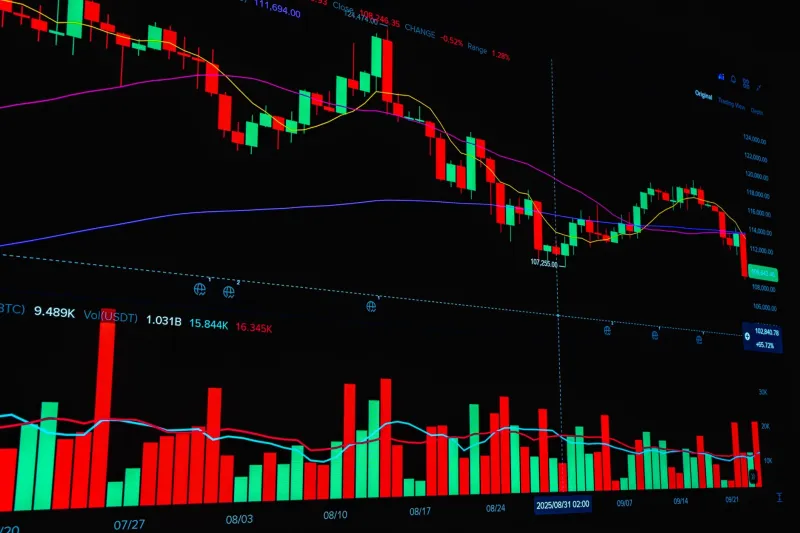
Doubling Down on a Dead Pool: The Mental Trap That Keeps LPs Stuck

Here's a scenario that probably sounds familiar: you added liquidity to a pool a few months back. The APY looked solid, the token pair had momentum, and the trading volume felt real. Then something shifted. Volume started thinning out. Your fee earnings dropped. The token on one side of the pair started drifting in the wrong direction.
And instead of pulling out, you added more.
You told yourself it was a strategic move — averaging in, shoring up the pool, riding out a temporary rough patch. But deep down, you might have been doing something else entirely: trying to justify the capital you'd already committed by committing more of it.
This is one of DeFi's quietest portfolio killers, and it has a name.
The Sunk-Cost Fallacy Doesn't Care About Your Thesis
The sunk-cost fallacy is the tendency to keep investing in something — time, money, energy — because of what you've already put in, rather than what you're likely to get out. It's the reason people sit through terrible movies they paid for, or stay in jobs they hate because of the years they've already logged.
In DeFi, it shows up constantly in LP decision-making. You've already deposited $5,000 into a pool. It's down 18% in real terms after accounting for impermanent loss and meager fee income. The rational move is to evaluate the pool as if you were seeing it fresh — would you add liquidity here today, knowing what you know? If the answer is no, then the prior $5,000 is irrelevant to the decision. What you lost is already lost.
But our brains don't work that way. The prior investment feels like a stake in the outcome. Walking away feels like accepting defeat. So instead, people add more capital, hoping the pool turns a corner and validates the original bet.
It almost never works the way they hope.
The False Signals That Feel Like Green Lights
What makes this trap especially dangerous is that dying pools often generate noise that looks like recovery. Here are the signals that trick LPs into staying — or adding — when they shouldn't:
A sudden volume spike. One good day of trading activity can make a struggling pool look like it's bouncing back. But isolated volume bumps are often arbitrage bots rebalancing after a price move, not genuine trader interest returning. Check the trend over 7 to 14 days, not a single session.
A fee earnings uptick. Similar story. A brief increase in fee revenue feels validating, but if it's not backed by sustained volume growth, it's just noise. One decent day doesn't reverse a structural decline.
TVL holding steady. If you're the one who just added capital, of course TVL looks stable — you inflated it. A pool where only existing LPs are adding (rather than new LPs entering) is not recovering. It's just more concentrated risk.
The token price rebounding slightly. Price recovery in one token of the pair can feel like the whole picture is improving. But impermanent loss mechanics mean that a partial price recovery can actually leave your position worse off depending on the direction and ratio of the move. Don't let a green candle convince you the pool is healthy.
What a Genuinely Struggling Pool Actually Looks Like
To distinguish between a pool worth waiting on and one that's truly terminal, you need to look past the daily noise and ask a few harder questions.
Is organic trading volume declining consistently? Not volatile, not lumpy — but on a clear downward trend over weeks? That's a structural problem, not a temporary dip. Traders go where liquidity is deep and tokens are relevant. If they're leaving, there's usually a reason.
Is the token pair losing relevance? A pool built around a token that's lost its community, its development activity, or its use case isn't going to bounce back on vibes alone. Check GitHub commits, social engagement, protocol activity — the fundamentals behind the token matter for your LP position whether you think of yourself as a trader or not.
Are other LPs quietly exiting? Watch the LP token supply or the TVL contribution from wallets other than your own. If seasoned liquidity providers are withdrawing, that's a signal worth taking seriously. Smart money leaving is not a contrarian opportunity — it's often a warning.
Is the fee income covering impermanent loss, or just masking it? Run the actual math. Take your current position value, compare it to what you'd have if you'd held both tokens outside the pool, and factor in the fees earned. If you're net negative and the gap is widening, no amount of patience is going to fix that without a dramatic reversal.
The Framework: Patience vs. Capitulation
Not every struggling pool deserves an exit. Some are going through real but temporary turbulence — a broader market downturn, a short-term narrative shift, a protocol upgrade that temporarily disrupted trading patterns. The key is having a framework that separates those situations from the ones where you're just delaying an inevitable loss.
Ask yourself three questions:
-
Would I add liquidity to this pool today if I had no prior position? Be honest. If the answer is no, that's your signal.
-
What specific catalyst would change the trajectory? If you can't name a concrete, realistic event — a protocol partnership, a token unlock resolving, a market cycle shift — then "waiting for recovery" is just hope dressed up as strategy.
-
What's the cost of being wrong for another 60 days? Model out what continued impermanent loss and declining fees would do to your position. Sometimes the downside of staying is bigger than the psychological discomfort of exiting.
Pulling Out Isn't Losing — Misallocating Capital Is
Here's the reframe that a lot of LPs need: withdrawing from a bad pool isn't admitting defeat. It's recovering capital that can be redeployed somewhere with actual momentum. The opportunity cost of staying in a dying pool isn't just the fees you're not earning — it's the returns you're missing by not being in a healthier one.
DuckSwap has pools with genuine volume, competitive fee tiers, and token pairs that are actually getting traded. The liquidity you're leaving parked in a pool that's slowly draining could be working harder somewhere else.
The duck that swims smarter isn't the one that paddles harder in the wrong direction. It's the one that reads the current, adjusts, and finds the water that's actually moving.
Stop feeding the illusion. Your capital deserves a better pool.