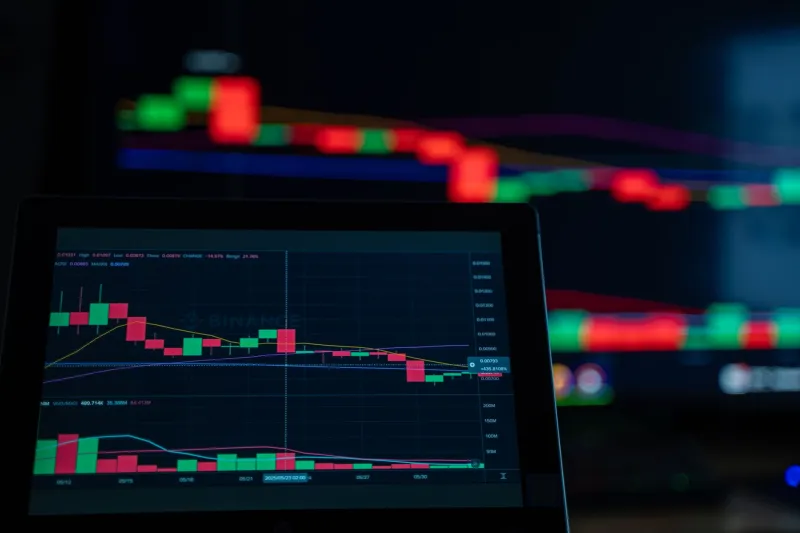
Shiny New Pool Syndrome: Why Fresh Launches Seduce Swappers and Silently Wreck LPs

There's something almost Pavlovian about a brand-new liquidity pool. The numbers are big, the buzz is real, and everyone in your Discord server is already aping in. For swappers, the early days of a pool can genuinely be a sweet spot — tight spreads, fresh arbitrage, and tokens moving fast. For liquidity providers, though? That same honeymoon period is often when the most damage gets done.
Let's talk about why new pools are so magnetically attractive, who actually benefits from them, and how to build a filter that keeps you from mistaking hype for health.
The Opening Rush Feels Like Proof of Concept
When a new pool launches — especially one tied to a token getting attention on crypto Twitter or a fresh protocol hitting the front page of DeFi aggregators — volume floods in fast. Swappers are chasing price discovery. Arbitrage bots are hammering inefficiencies. Speculators are rotating in before the crowd.
From the outside, all of that activity looks like demand. The charts are moving, the fee revenue is ticking up, and the APY display is lighting up like a Vegas slot machine. It's easy to interpret this as a signal that the pool is healthy and that providing liquidity here is a smart play.
But here's the uncomfortable truth: early volume in a new pool is often noise, not signal. It reflects the mechanics of price discovery and speculative churn, not sustainable trading demand. Once the arbitrage gaps close and the speculators rotate out, you're left with whatever organic demand actually exists — and in a lot of new pools, that number is much closer to zero than the launch week charts suggested.
Reward Incentives Are Distorting the Picture
Most new pool launches come bundled with liquidity mining incentives. Projects need liquidity fast, so they attach token rewards to LP positions to attract capital. On paper, this makes sense. In practice, it creates a feedback loop that completely warps your ability to read true market demand.
When a pool is paying out 200% APY in native tokens, LPs aren't providing liquidity because they believe in the asset pair. They're farming yield and planning to exit the moment rewards drop. The TVL you're seeing isn't a reflection of genuine conviction — it's mercenary capital that will vanish the second a better farm shows up across the street.
This matters for you as an LP because your returns depend on fee revenue, not just rewards. If the underlying trading demand evaporates when the incentives dry up, you're sitting in a pool that's generating almost nothing in real fees while your position bleeds impermanent loss. The reward tokens you're collecting are often denominated in the same project token that's been selling off because every other farmer is dumping it simultaneously.
The Impermanent Loss Window Is Wide Open at Launch
New pools are volatile by definition. Tokens haven't found price equilibrium yet, which means the gap between where the pool is pricing an asset and where the broader market is pricing it can be enormous — and that gap is exactly where impermanent loss lives.
Every time an arbitrage bot corrects that gap, your LP position takes a hit. In an established pool with a mature token, those corrections are small and frequent. In a brand-new pool with a speculative asset, they can be massive and directional. The token might drop 60% in a week. Or it might 3x and then crash. Either way, the swings are brutal, and your position is absorbing them.
The people making money in that environment are the arbitrageurs and the early token holders who are selling into your liquidity. You, as the LP, are often the exit liquidity.
How to Separate Genuine Need from Manufactured Hype
None of this means you should categorically avoid new pools. Early LP positions in genuinely useful protocols can be incredibly lucrative. The trick is developing a framework to tell one from the other.
Start with the token fundamentals, not the APY. Before you look at yield numbers, ask whether the underlying token has any reason to hold value six months from now. Does the project generate real revenue? Does the token have utility beyond speculation? If the honest answer is "not really," then the pool's long-term fee revenue is going to reflect that.
Look at volume composition. Some analytics tools let you break down pool volume by transaction type. If you're seeing a high ratio of large, infrequent trades versus a steady stream of smaller organic swaps, that's often a sign the volume is bot-driven arbitrage rather than genuine user demand. Organic demand looks messy and consistent. Arbitrage volume looks mechanical and spiky.
Check the reward token's vesting and distribution schedule. If the project is emitting massive rewards with no lock-up, every LP is a potential seller. That's a recipe for reward token collapse, which means the APY you're projecting will evaporate faster than you can compound it.
Ask who else is providing liquidity. Mercenary capital from yield farmers is not the same as sticky liquidity from long-term believers. If the top LPs are known farming wallets with a history of rotating out after incentives end, take that as a signal about where the pool is headed once the party's over.
Give it time before committing serious capital. There's no rule that says you have to be first. Letting a pool run for four to six weeks before deploying gives you real data on whether volume holds after the initial frenzy, whether the reward APY is sustainable, and whether the token is showing any signs of fundamental demand. You'll miss some of the peak yield. You'll also miss a lot of the worst losses.
The Swapper's Advantage Is the LP's Disadvantage
Here's the dynamic that ties everything together: swappers love new pools because volatility creates opportunity. Prices are inefficient, spreads are wide, and fast movers can extract real value. LPs, on the other hand, are most vulnerable when volatility is highest and token fundamentals are least proven.
The interests of early swappers and early LPs in a new pool are often directly opposed. Understanding that tension is the foundation of smarter liquidity provision.
At DuckSwap, we want you deploying capital where it actually works for you — not just where the number on the screen looks biggest this week. New pools deserve scrutiny, not reflexive FOMO. The most durable LP positions are the ones built on real demand, not manufactured excitement.
Do the homework before you deploy. The mirage will still be there tomorrow. The real opportunities will still be there too — and they'll be a lot easier to see once the hype clears.